
Cleveland, OH and Greater Cleveland
Pool and Hot Tub Decks in Cleveland, OH
Surrounds for above ground pools and platforms for hot tubs, both framed for the weight they truly carry, with a surface that does not burn feet or turn treacherous once it is wet.
- Footings below the frost line
- Permits and inspections handled
- Written scope before we start
Cleveland Custom Decks builds pool surrounds and hot tub platforms across Cleveland and Greater Cleveland, engineered for the concentrated weight of water rather than treated as a standard deck with a different purpose.
Water is heavy, and a deck built to hold people is not automatically built to hold a filled pool or hot tub as well. Getting this specific load calculation right is the whole difference between a platform that lasts and one that fails quietly over a few seasons.
What we build
Above ground pool surrounds
Partial or full wraparound decking around an above ground pool, giving proper entry and exit points and somewhere to sit that is not the pool ladder. Framing accounts for both the pool’s own weight where the deck ties into it and standard occupant load across the rest of the surround.
Hot tub platforms
A dedicated platform, typically around eight by eight feet, engineered for a concentrated load a standard deck frame is not sized to carry. This is one of the few project types on our list priced as a package rather than by area, since the structural requirement is fairly consistent regardless of finish choices.
In ground pool perimeter decking
Decking around the perimeter of an in ground pool, which is more about surface finish, drainage away from the pool edge and barrier compliance than the concentrated load question a hot tub raises.
Engineering for water weight
Concentrated load, not distributed load
A standard deck is designed for a fairly even distributed load across its footprint. A hot tub concentrates an enormous weight onto a small footprint, and the footings, beams and joists directly beneath it need to be sized for that specific concentration rather than the deck’s average load.
Footings that account for the extra weight
Piers beneath a pool or hot tub structure are set below the frost line, as with any deck in this climate, and sized larger where the load calculation calls for it, which a hot tub platform very often does.
Surface and finish for wet conditions
Slip resistance where it actually matters
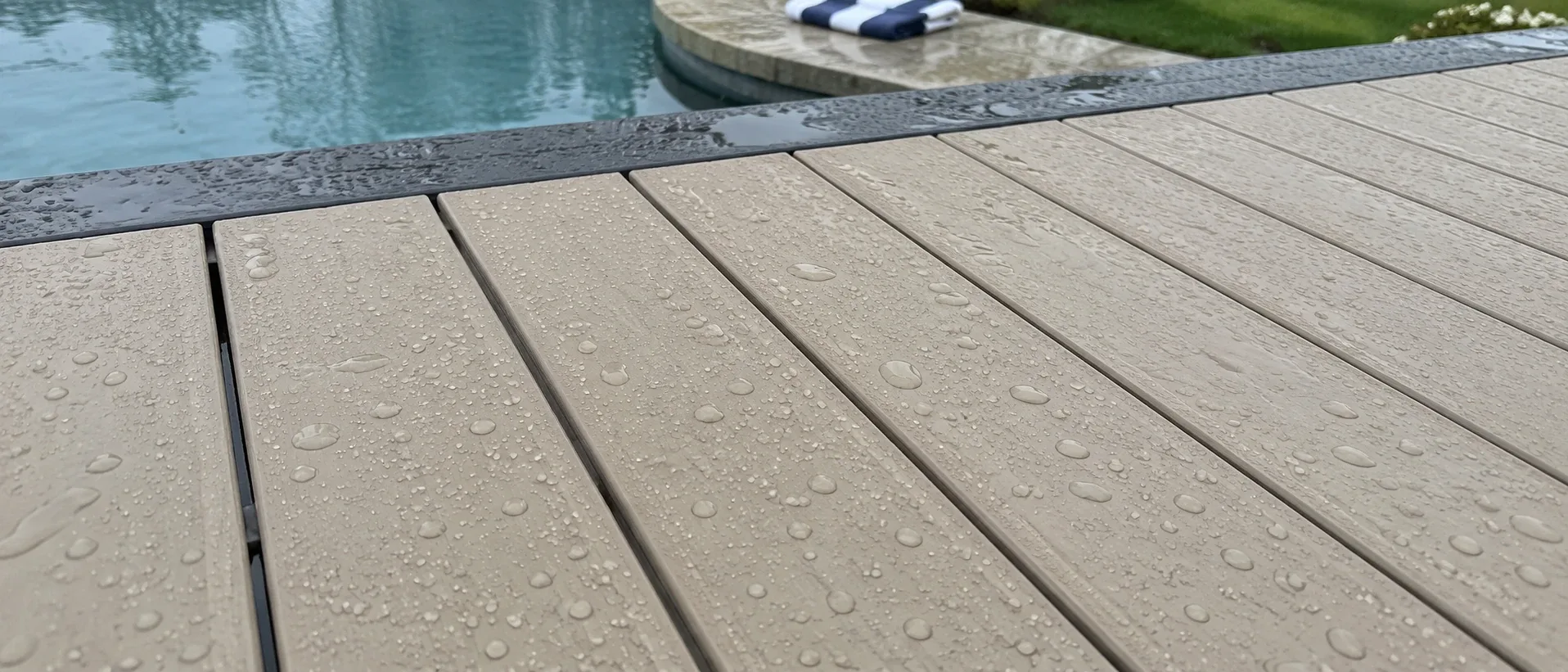
A textured or embossed composite or PVC surface rated for wet foot traffic is standard on anything we build around water, since a smooth board that is fine dry becomes genuinely hazardous once splashed repeatedly.
Materials that shrug off chlorine and damp
Capped composite and PVC both resist the staining and degradation that constant pool splash or hot tub steam causes to an unsealed timber surface over time, which is why both materials dominate this category. See the composite decking page for how the two compare.
Cooler underfoot in full sun
On the region’s more open, unshaded lots, a lighter coloured PVC or composite board stays noticeably cooler around a pool through July and August than a dark board would, which matters directly for bare feet.
Barrier and railing compliance
Where a deck sits at a height requiring a guard, or where pool barrier rules apply in your specific jurisdiction, railings and any gates are built to the self closing and self latching standard that pool barrier compliance typically requires, not just the standard residential guard rule.
Cuyahoga County winter and a seasonal pool
Draining and protecting the structure over winter
An above ground pool commonly comes down or gets covered for the cold months here, which leaves the surrounding deck standing on its own through a full lake effect winter. We build the frame and finish to withstand that exposure directly rather than assuming a pool will always be nearby to moderate conditions around it.
Freeze thaw and a hot tub platform
A hot tub, unlike an above ground pool, usually runs year round, which means its platform sees constant thermal cycling between the heat and steam of the tub itself and freezing air temperature around it. We detail the framing and any skirting with that specific exposure in mind rather than treating it as an ordinary outdoor structure.
Planning access and utilities
Getting equipment and materials to the site
Pool and hot tub platforms often sit in the more private, less accessible part of a yard, and on a tighter Cleveland or inner suburb lot that can mean material has to be carried in by hand rather than delivered directly. We account for that access reality at the estimate rather than after the crew arrives.
Electrical and plumbing coordination
A hot tub platform in particular needs its electrical service roughed in before the structure closes up, and we coordinate that timing with your electrician so the deck is not built and then partially disassembled to run a missed circuit.
Getting a pool or hot tub deck estimate
These projects are typically priced as a package for the structure type rather than scaled continuously by area, since the engineering requirement is fairly consistent. The deck cost guide carries general ranges, and a site visit confirms the specific load and barrier requirements for your property.
Deck cost in Cleveland, OH
Plug in the dimensions and finish to see the installed cost range, no phone call required.
Why homeowners pick Cleveland Custom Decks
Footings below the frost line
Cuyahoga County ground freezes and thaws through a long lake effect winter. Every post we set lands on a poured footing below the local frost depth, which is what keeps a deck level through a decade of heave and thaw.
Permits and inspections handled
We work out which department your address answers to, pull the permit, meet the inspector and hand you the signed card. An unpermitted deck becomes your problem the day you sell the house.
Written scope before we start
Materials, framing spec, hardware, timeline and price in writing before anybody swings a hammer. No verbal change orders.
Pool and Hot Tub Decks questions we get asked
How much does a hot tub platform need to hold?
A filled hot tub with occupants commonly weighs well over 5,000 pounds concentrated on a footprint of roughly eight by eight feet, far more per square foot than a standard deck load is designed for. We size footings, joists and beams specifically for that concentrated load rather than treating a hot tub platform as a slightly reinforced ordinary deck.
What decking material is best around a pool in Cleveland?
Capped composite or PVC, since both resist the constant splash and damp that a wood surface struggles with over time, and neither needs resealing on the schedule a timber deck would. PVC in particular runs cooler underfoot in direct sun and resists chlorine exposure well, which matters on the region's more open, unshaded lots.
Do pool decks need slip resistant boards?
Yes, and this matters more around a pool than almost anywhere else on a property, given how consistently wet the surface stays. We fit boards with a textured or embossed surface rated for wet foot traffic rather than a smooth board that becomes genuinely dangerous once splashed.
Does an above ground pool need a permit for its surrounding deck?
The deck structure itself almost always needs a building permit regardless of the pool type, and many jurisdictions in this market also require pool barrier compliance, meaning the deck and any gates around it have to meet specific self closing and self latching requirements. We confirm both requirements for your specific address before quoting.
Can an existing deck be extended to reach a new pool or hot tub?
Sometimes, if the existing frame was built to carry standard deck loads rather than the concentrated weight a hot tub adds, or the wet, chlorinated conditions a pool surround creates. We assess the existing structure honestly rather than assuming it can simply be extended.