
Cleveland, OH and Greater Cleveland
Deck Railing Installation in Cleveland, OH
Guards in aluminium, cable, glass and timber, anchored into the frame the way the code intends instead of being driven down through the decking. This is the part of the build that carries a person's weight and the part an inspector studies hardest.
- Footings below the frost line
- Permits and inspections handled
- Written scope before we start
Cleveland Custom Decks installs deck railings across Cleveland and Greater Cleveland, anchored into the frame at the spacing and height the code requires, in aluminium, cable, glass or timber.
A railing is the part of a deck most likely to actually be leaned on hard, and it is also the part most often cut on a low bid job, since a post screwed through the decking looks identical to a properly anchored one until somebody puts real weight on it.
Railing materials we install
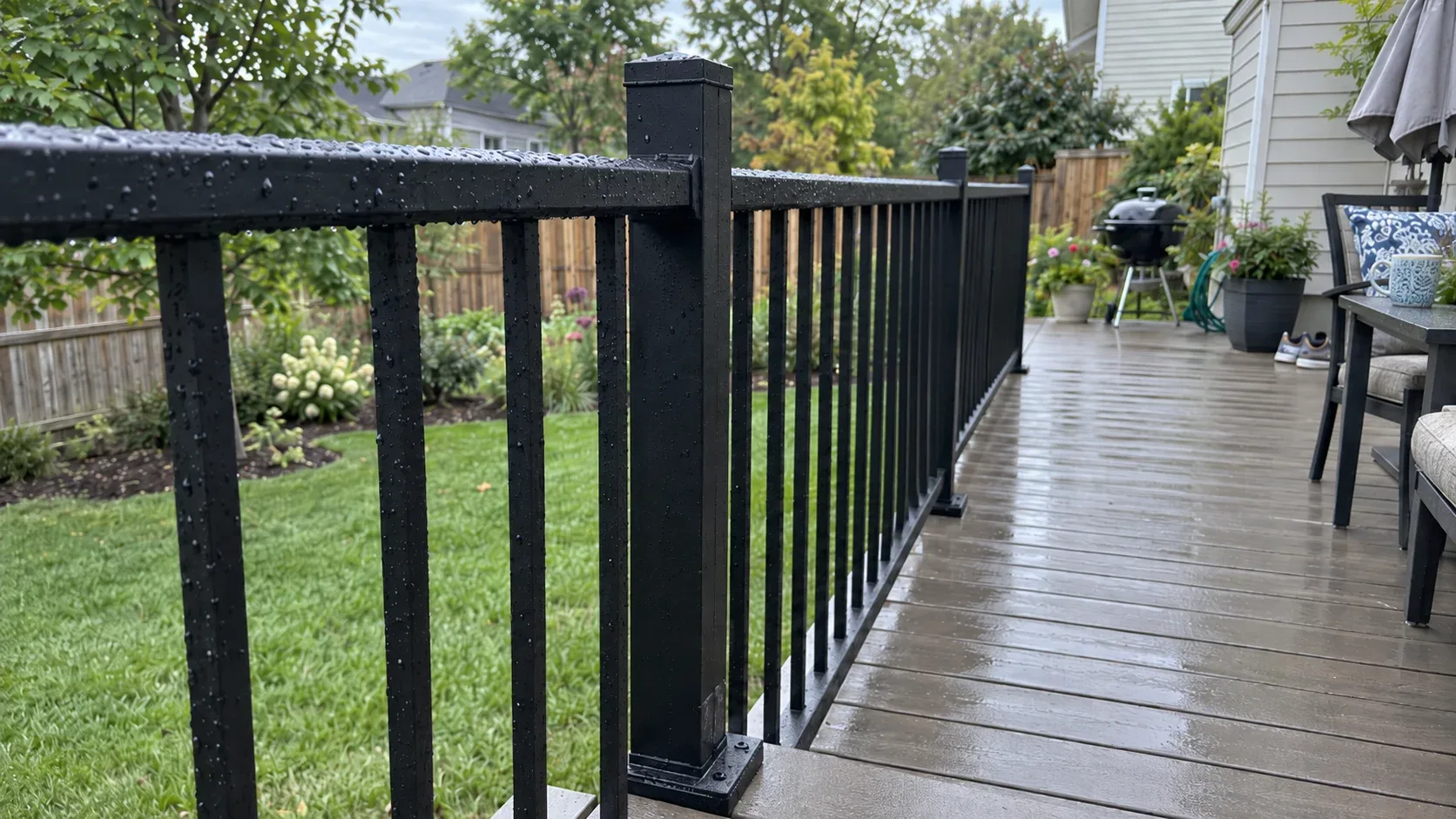
Black aluminium
The most requested upgrade on the decks we build, because it never needs repainting, resists the region’s freeze thaw and humid summers without issue, and reads as nearly invisible from a distance, which suits a deck looking out over a ravine, a lake glimpse, or simply a garden you would rather see clearly than through a heavy rail.
Cable railing
Horizontal steel cable strung between metal posts, giving an unobstructed view with a genuinely modern look. Cable needs periodic tensioning as it settles, and the posts carry real engineering requirements since the cable itself puts considerable lateral load on the end posts.
Glass panel railing
Tempered glass panels set into a metal or composite frame, chosen where an unbroken view matters more than anything else. Glass shows water spots and road salt spray more readily than metal, so it asks for more frequent cleaning through a Cleveland winter than the other systems.
Pressure treated and composite railing
The most economical option, matching or complementing a timber deck surface. Treated timber railing needs the same sealing cycle as timber decking to avoid greying and splitting; composite railing systems need none of that upkeep but cost more up front.
How we anchor a railing properly
Blocking within the frame
Every railing post is fastened into solid blocking installed during framing, not simply screwed down through the surface boards. This is set out at the framing stage, which is why railing choice matters early in the design conversation rather than being an afterthought once the deck is finished.
Correct baluster and cable spacing
Current residential code requires guard infill spaced so a 4 inch sphere cannot pass through it, which we build to whatever specific spacing the material and the local code edition requires, checking cable tension against that same standard.
Stair handrails built to their own standard
Stair railings follow separate height and graspability rules from a deck’s perimeter guard, and any stair run over a certain number of risers needs a graspable handrail on at least one side, sized to be comfortably gripped rather than simply matching the deck rail profile.
Railings on a repair or replacement job
Diagnosing a wobbly existing railing
A railing that shifts when leaned on is almost always fastened into decking rather than the frame, or the frame itself has begun to fail behind it. We check both before quoting a fix, since replacing the railing alone solves nothing if the frame behind it is the actual problem. More on deck repair.
Upgrading railings on an otherwise sound deck
Where the frame is solid, swapping timber railings for aluminium or cable is a straightforward upgrade that changes the whole feel of a deck without touching the surface, and it is one of the more common standalone requests we get on older decks across the city and inner suburbs.
Pairing railings with lighting
Aluminium and cable rail profiles in particular pair well with an under rail LED strip, since the rail’s own shape often provides a natural channel to run it in. See the deck lighting page for how that wiring gets run.
Corner and gate details
Post caps and corner returns
Corner posts and any gate opening take more careful layout than a straight run, since baluster or cable spacing has to divide evenly across each span rather than leaving an odd, oversized final gap. We lay this out before any post goes in rather than adjusting on the fly.
Self closing gates where required
Where a railing gate serves a pool barrier or a stair opening a small child could reach, self closing and self latching hardware is fitted as standard, matching the requirement covered on the pool decking page for barrier compliant enclosures.
Railings on design reviewed properties
In Shaker Heights, where exterior changes go through the Architectural Board of Review, railing material and colour are often part of what that board evaluates alongside the deck itself, since a railing is highly visible from the street on many lots. We specify the exact product and finish in the submission drawings rather than leaving it as a general description, which is what moves a review through without a follow up request.
Getting a railing quote
Pricing runs by linear foot and varies meaningfully by material, covered in detail on the deck cost guide. A site visit confirms the actual perimeter and whether the existing frame, if there is one, is sound enough to anchor into.
Deck cost in Cleveland, OH
Plug in the dimensions and finish to see the installed cost range, no phone call required.
Why homeowners pick Cleveland Custom Decks
Footings below the frost line
Cuyahoga County ground freezes and thaws through a long lake effect winter. Every post we set lands on a poured footing below the local frost depth, which is what keeps a deck level through a decade of heave and thaw.
Permits and inspections handled
We work out which department your address answers to, pull the permit, meet the inspector and hand you the signed card. An unpermitted deck becomes your problem the day you sell the house.
Written scope before we start
Materials, framing spec, hardware, timeline and price in writing before anybody swings a hammer. No verbal change orders.
Deck Railings questions we get asked
What height do deck railings need to be in Cleveland?
Current residential code requires a guard at least 36 inches high for most residential decks, measured from the deck surface to the top of the rail, with baluster spacing tight enough that a 4 inch sphere cannot pass through. We build to whichever edition of the code the permitting office in your specific city or suburb is enforcing at the time.
Why does a railing need to attach to the frame rather than the decking?
A railing post screwed only into the decking boards is relying on fasteners driven into a thin surface board to resist the full lateral load of someone leaning against it, which those fasteners were never sized for. Posts anchored into blocking within the frame itself carry that load the way the structure is designed to, and it is the difference an inspector checks for and the difference that actually matters in a fall.
Which railing material suits Cleveland's climate best?
Aluminium and cable systems with metal posts need no repainting and shrug off the region's freeze thaw cycle and near constant humidity better than timber railings, which need the same sealing attention as a timber deck surface. Glass panels look striking but need regular cleaning given how much lake effect moisture and road salt spray can land on a railing through winter.
Can I replace just the railings without touching the deck?
Yes, provided the frame beneath is sound enough to anchor new posts properly. We check for that at the estimate, since railings fastened into a deteriorated rim joist or a frame without proper blocking will fail again regardless of how good the new railing looks.
Do stair railings follow different rules than deck railings?
Stair handrails follow their own height and graspability requirements, generally lower than a deck's perimeter guard and sized to be comfortably gripped, and any stair with more than a few risers typically needs one on at least one side. We build both to the specific requirement the inspector for your address will check.